The Arithmetic of Dharma: When Saving the World Means Sacrificing Your Child
MYTHCHARACTERS
Vivek D. Menon
2 min read
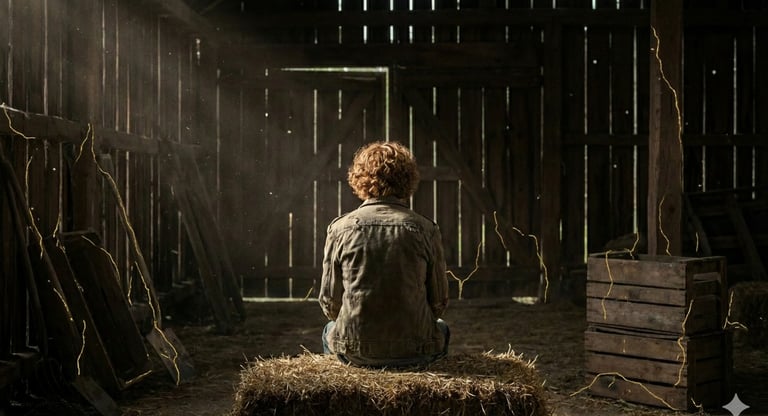

“The king who sacrifices those who depend on him for protection has already lost his kingdom. The throne may remain beneath him but he no longer sits upon dharma.”
—Bhishma as he lies dying among the carnage of war
Stories of the "Chosen One" are common and appreciated, like sunny days. For every ten, perhaps one dwells on the cost of the choosing. In these, the hero bleeds, their mind cracking under the strain. Sometimes the price is death itself.
But what a parent forces the choice, and its cost, upon their child?
In One Destroyer’s Dharma, Nathan Kaurakan’s deeds cast a long shadow over his daughter Ishara. To the Worldrivers, he is a Great Man: an oligarch and respected elder, one of those who must lift humanity up into the stars and guide them toward a thriving, boundless future. Yet at the height of his power and prestige, Nathan hides Ishara away, only to vanish into the darkness between worlds, leaving her with brutal choices and no answers.
“You gave me nothing but life, and then threw that life into the current.”
—Karna to his mother Kunti, the wife of the King
In the Mahabharata, a queen sets her firstborn adrift on the river to shield her other five children; that castaway grows into the ultimate warrior, only to die at their hands. A blind king looks aside while his sons seize power through treachery; those same sons die in the war that follows, defending what they stole. A great guru cuts the thumb from a low-born student so his high-born pupil may remain supreme; that high-born later slays the guru on the battlefield.
The epic is clearly unforgiving of these choices, when elders sacrifice the vulnerable and weak to causes like Glory, Empire, or even Survival. Even when the need is real and the greater good shines through, the arithmetic stands: there is a crime against Dharma, a reckoning when the duty to a child is broken. For such breakings, the spirit pays.
The Arithmetic of Dharma
In One Destroyer's Dharma, Nathan Kaurakan believes in the necessity. If he engineers and molds his daughter, if he feeds her future to his cause, he might save billions. The arithmetic, however painful, seems clear to him.
But the bill always comes due. The question is... who is the hand that collects the price, and how how heavy will it be?
FAQ
While there are real physical threats from rival dynasties and oligarchs, the emotional antagonist is the legacy of Ishara's father, Nathan Kaurakan, whose choices to sacrifice his daughter for the "greater good" drive the novel's conflict.
It is a central theme in the novel suggesting that spiritual debts cannot be ignored. Sacrificing a loved one for a "greater cause" always results in a catastrophic consequence, mirroring the tragic events found in the Mahabharata. It does not mean the sacrifice was unnecessary, only that a price must be paid.
Who is the villain in One Destroyer’s Dharma?
What is the arithmetic of Dharma in the novel?
Best sci-fi books about father-child relationships?
Reach out to discuss stories or collaborations
© 2025 Vivek D. Menon Writes. All rights reserved.
Official hub to decode the tech, worldbuilding and myths of Vivek's universe.